What We Do

Services

Every job we take on, from a full build to a same-day fix.

HomeServices

Everything we take on

Every job below is one we do ourselves across Palmdale.

Deck Installation

We frame new decks with joist hangers rated for outdoor use and set footings below the point where our soil starts moving. Ledger boards get flashed to keep water from finding the house framing. Most standard decks go from framing to finished boards in a week to two, depending on size.

Custom Deck Design

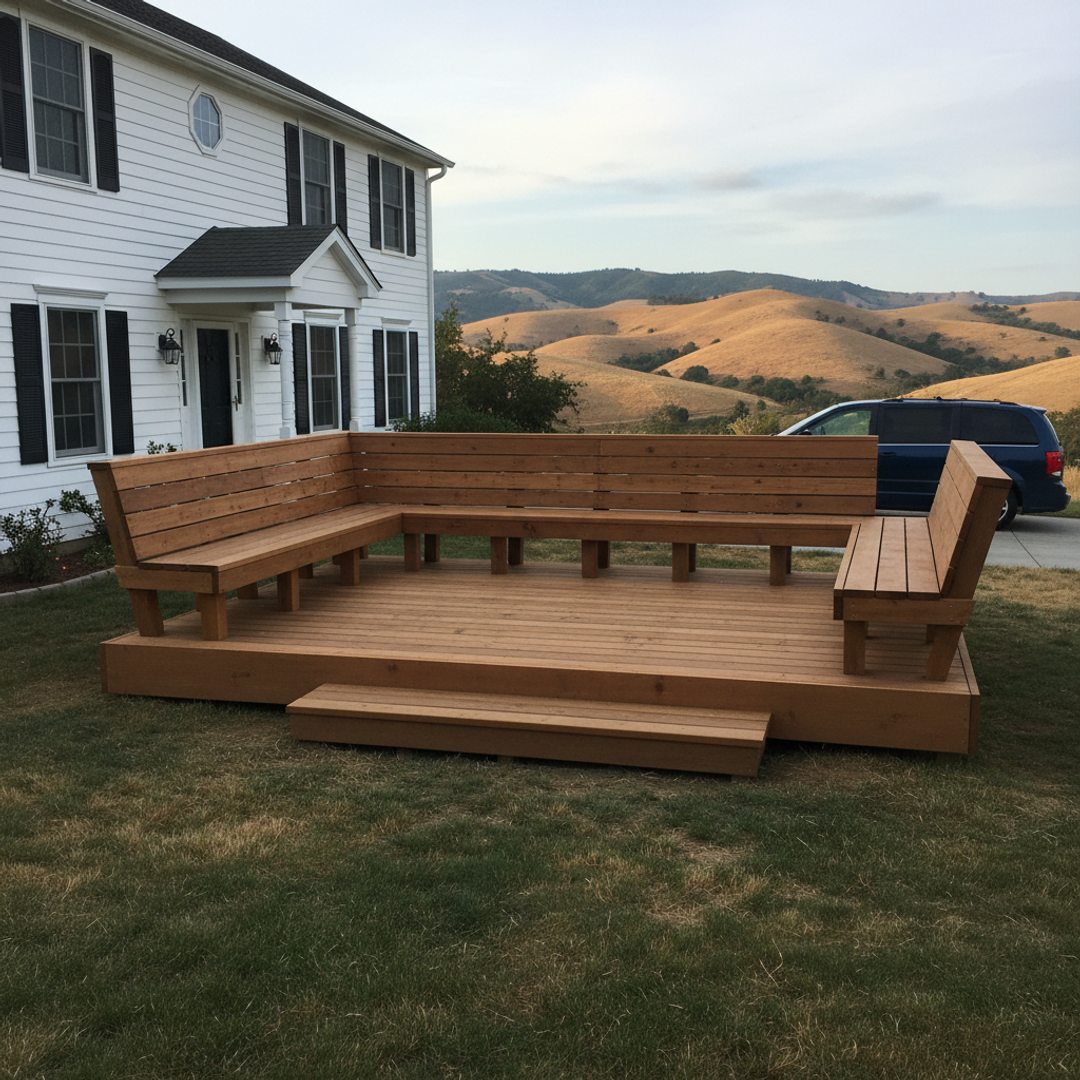
Some decks need to wrap around a pool equipment pad or step down a slope, and that changes the framing math. We'll walk your yard, take actual measurements, and draw the layout before any lumber shows up. If you want built-in seating or a change in elevation, we plan for it in the footings, not as an afterthought.

Deck Repair

Soft spots in the decking usually mean the joists underneath are rotting, not just the board on top. We pull boards, check the frame, and replace what's actually failed instead of just capping over it. A loose railing post or a squeaky stair stringer gets fixed the same visit if it's a small job.

Deck Staining & Sealing

Antelope Valley sun bleaches and dries out wood fast, and a deck left unsealed for a couple summers starts to crack and splinter. We pressure wash, let the wood dry fully, then apply a stain and sealer rated for high UV exposure. Composite decking skips this step entirely, but the wood needs it every year or two depending on sun exposure.

Composite Decking

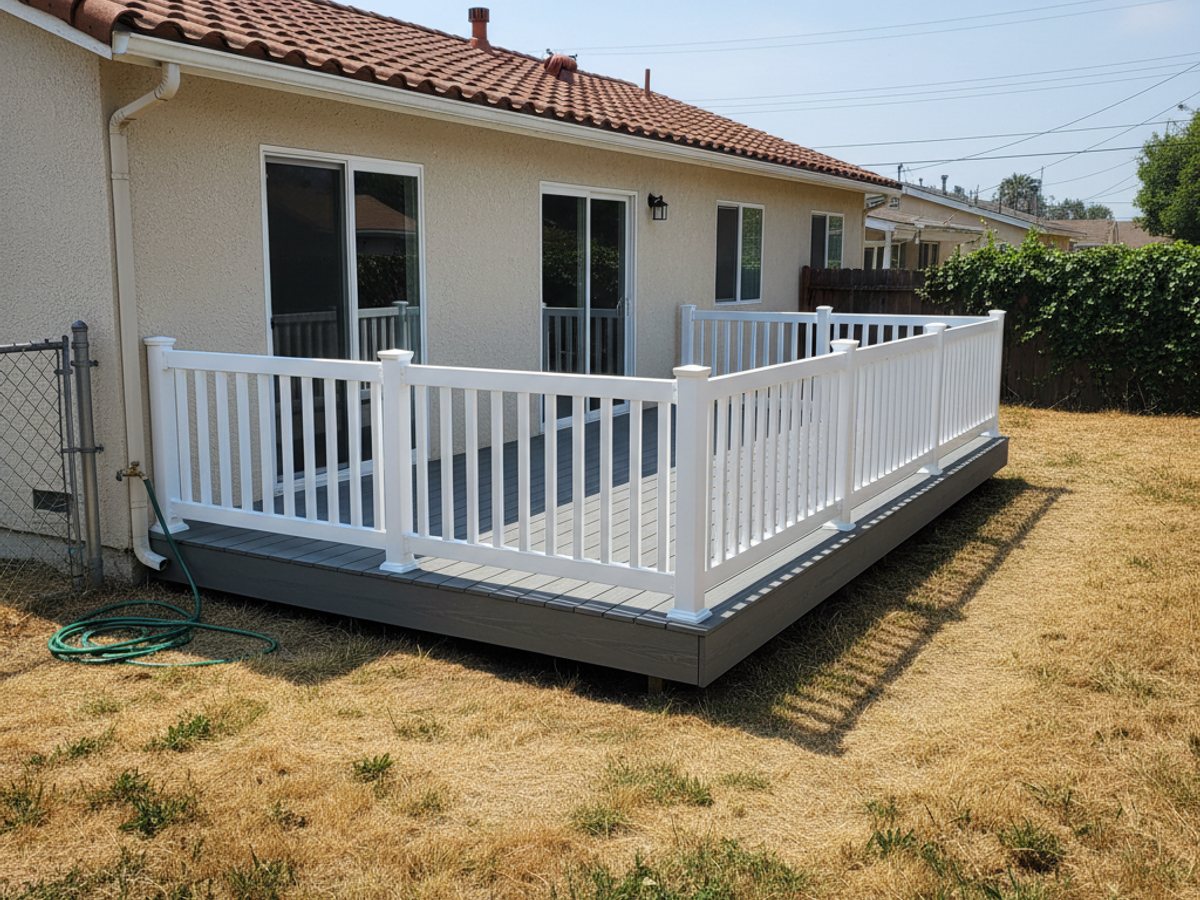
Composite boards like Trex or TimberTech don't rot, splinter, or need restaining, which matters if you don't want a yearly maintenance job. They do run hotter underfoot in direct summer sun than wood, so board color and shade matter more here than in a coastal climate. We install with hidden fasteners for a clean look, no visible screw heads.

Deck Railing Installation

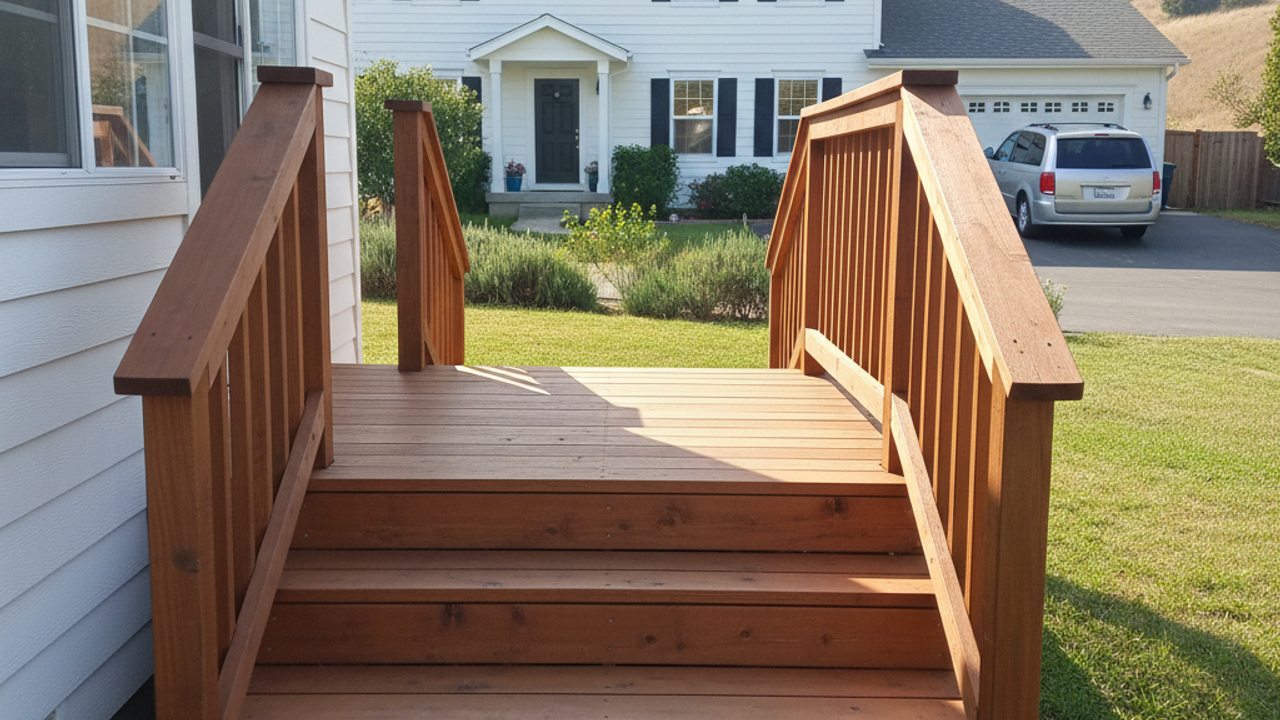
California code calls for guardrails at 42 inches on decks over 30 inches off the ground, with no gap wider than 4 inches between balusters. We build to that spec whether it's a wood rail, cable rail, or a composite system. Loose or wobbly railings on an old deck usually mean the post was never bolted to the frame properly, and we'll fix that at the connection, not just tighten a screw.

Deck Resurfacing

If the frame underneath is solid but the boards are cupped, splintering, or just tired, we can strip the old decking and lay new boards on the existing joists. It's a faster job than a full rebuild and costs less, as long as the framing passes inspection first.

Multi-Level Deck Construction

A deck that steps down with the grade needs separate footing depths and beam sizes at each level, and the stair stringers between them have to land on solid framing, not just be screwed to the deck face. We size each level as its own structure tied into the next.

Deck Demolition & Removal

Old decks come down board by board so we can check what's reusable and haul off what isn't. We'll also flag if the ledger board did damage to the house framing behind it, which happens more often than people expect on decks over ten years old.

Pergolas & Covered Decks

A lot of Palmdale decks get more use with some shade over them, given how many months a year direct sun makes the afternoon unusable. We build pergolas and covered structures tied into the same posts and beams as the deck below, sized for our wind loads.

How It Works

Four steps, and no surprises in any of them.

01

We come and look

You tell us what you want doing, we look at what is actually there, and we ask the awkward questions early.

02

You get a price

In writing, itemised, free. If something might add cost later we flag it now rather than at the end.

03

We do the work

Same crew throughout. We cover your floors, keep the dust down and tidy up before we leave each day.

04

We walk it with you

You point out anything you are not happy with and we fix it before the invoice, not after.

Where We Work

All of this, across Palmdale, CA

Deck work across the Antelope Valley and the high desert beyond it.

Palmdale, CA
Santa Clarita, CA
Lancaster, CA
Victorville, CA
Hesperia, CA
Rosamond, CA
Tehachapi, CA
Quartz Hill, CA
Acton, CA
Littlerock, CA
Mojave, CA
Common Questions

Things worth asking

What comes up once a deck project actually gets underway.

Does a new deck need a permit?
Most decks over 30 inches above grade, or any deck attached to the house, require a building permit in California, which means an inspection of the footings and framing before the boards go down. Low, freestanding decks under that height sometimes skip the permit requirement, but local building departments vary, so checking with the city or county first is worth doing.
How long does a deck build take?
A standard single-level deck under 400 square feet usually takes one to two weeks from framing to finished boards, including inspection time. Multi-level decks, covered structures, or ones with a lot of custom railing can run three to five weeks.
Can a deck be built to a specific budget?
Deck size, decking material, and railing style are the three levers that move a price up or down, so a budget can usually be met by adjusting one of those rather than cutting corners on framing or footings. Pressure-treated lumber decking costs less upfront than composite but requires restaining every year or two.
Is the work guaranteed?
Framing and structural work should carry a workmanship warranty separate from the manufacturer's warranty on materials like composite decking, which often runs 25 years or more against fading and staining. Ask specifically what's covered under labor versus what's covered by the lumber or composite manufacturer.
Who do I deal with once the job starts?
On most deck jobs, one crew lead or project manager handles daily questions and schedule changes rather than the homeowner talking to whoever happens to be on-site that day. That person should be reachable directly, not through an office line only.
What lumber or decking material should I use?
Pressure-treated pine is the standard framing lumber for deck joists and beams regardless of what goes on top. For the visible decking, the choice is usually between cedar or redwood for a natural look, or composite boards like Trex and TimberTech for lower maintenance, with composite running hotter underfoot in direct sun.
Can I still use my yard while the deck is being built?
The yard stays usable during most of a deck build, though the immediate work area has to stay clear for safety and material staging. Access to the house is rarely affected unless the deck attaches directly to a door or the ledger board work requires opening up siding.
How should I prepare the site before work starts?
Clearing furniture, planters, and grills off the old deck or the build area is the main prep work required from a homeowner. Anything underneath the deck footprint, like sprinkler lines or low-voltage wiring, should get flagged ahead of time so it doesn't get hit during footing excavation.
What happens if something unexpected turns up mid-project?
Rotted ledger board framing, an old footing that doesn't meet current code, or buried utility lines are the most common surprises found once demolition starts on an existing deck. A reputable contractor stops and explains the issue and the cost impact before proceeding, rather than just billing for it afterward.
How do I take care of a deck after it's finished?
Wood decking requires a fresh coat of sealant roughly every one to two years in a high-UV climate, sooner if the boards start looking gray or dry. Composite decking just requires periodic washing to clear dust and debris, plus keeping gaps between boards clear so water drains through instead of pooling.

Not sure what you need?

Describe the problem and we will tell you what it probably is. No obligation.
Call (661) 485-5465